
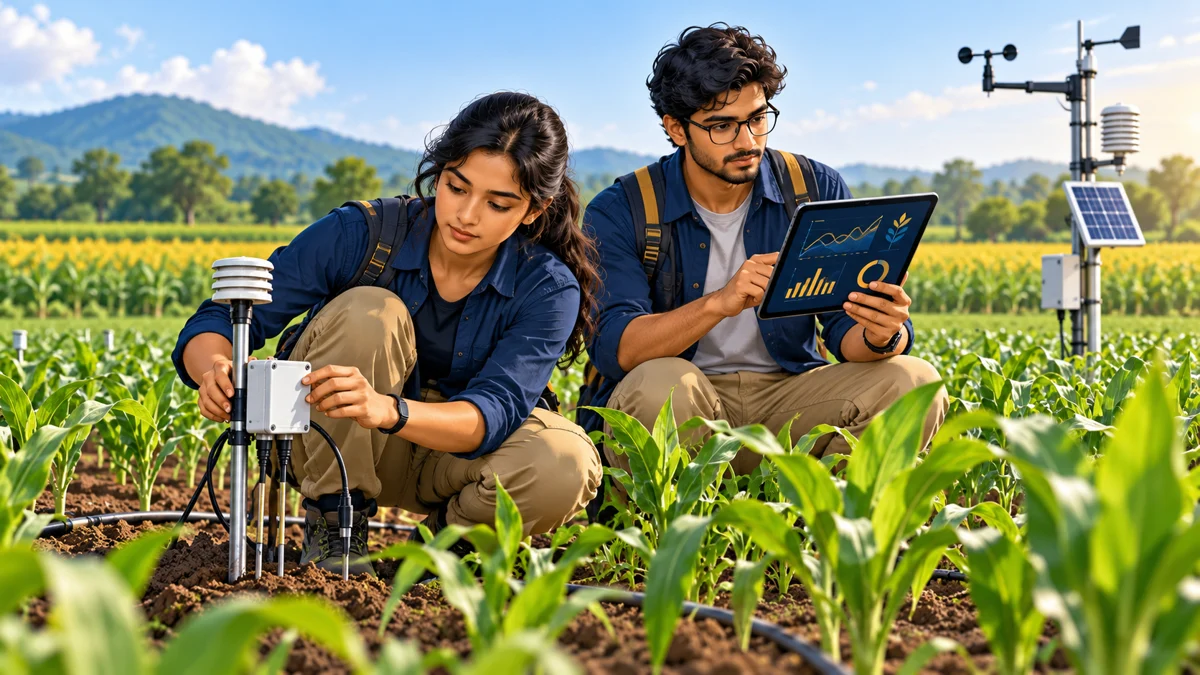
Interested in applying computing skills to agricultural problems? Amrita Vishwa Vidyapeetham lists a Digital Agriculture Internship Programme with an application deadline of 31 October 2026. Before applying, check the intended applicant group and participant cost: an internship title does not automatically mean a paid position.
Read eligibility and cost first. The official page describes the programme for third-year B.Tech Computer Science students. It lists a participant fee, not a stipend. B.Sc Agriculture students or applicants from other branches should obtain confirmation of eligibility directly from the organiser.
Digital Agriculture Internship 2026: key details
| Item | Published detail |
|---|---|
| Location | Amritapuri Campus, Amrita Vishwa Vidyapeetham |
| Programme period | 1–30 December 2026; described as four weeks and 20 working days |
| Participant fee | ₹15,000 per student, including food and accommodation |
| Learning focus | GIS and remote sensing, sensors, field data, Python, analysis and community engagement |
Use the official programme page for the current flyer and organiser contact. It does not establish that a seat is reserved for everyone who enquires. Ask about selection, availability, the correct application route and any additional charges before paying.
Decide whether the learning format fits your goals
The published activities connect technical work with field observations. A useful way to evaluate that combination is to ask whether you want to understand a real problem as well as build a tool.
- If you enjoy coding: Consider whether you want practice explaining where data came from and what its limitations mean, alongside writing a functioning program.
- If you enjoy hardware: Ask what equipment you would use, what supervision is provided and how much time is available for troubleshooting.
- If you want agricultural exposure: Ask how field tasks are organised and how technical observations are connected to the local context.
- If you need academic credit: Obtain your own college's approval first. Do not assume a programme will satisfy an internship requirement simply because it is called an internship.
These are evaluation questions, not promises about your individual assignment. The organiser's confirmation and your college's requirements should guide your decision.
Prepare a focused enquiry before committing
- Check your academic fit. Have your course, branch and study year ready. Explain any difference between your background and the listed applicant group.
- Check your calendar. Compare the programme period with examinations, semester attendance and travel. Ask your department what permission you need.
- Ask for the correct process. Confirm where this particular programme accepts applications, what documents are needed and how selection is communicated. A university's general admissions form may serve multiple courses.
- Get the complete cost conditions. Ask about payment timing, cancellation, refunds and items outside the stated inclusions. Add travel and personal expenses to your own budget.
- Retain written confirmation. Keep the applicable flyer, correspondence, acceptance information and receipts together. Clarify any contradictory instruction with the organiser.
You do not need to send a long generic statement of interest. Explain your current skills, one area you hope to practise and the specific questions that determine whether you can attend.
Plan for evidence of learning, not just attendance
If selected, agree on what you can document and share. A useful personal record can connect a question, a method, the limitations of the observations and a short explanation of the result.
For example, a small analysis notebook could show how you checked missing observations and why you selected a chart. A hardware log could explain a problem you encountered and how you tested a correction. These are suggested learning habits, not additional deliverables imposed by the programme.
Do not publish identifiable participant information, farm records, private datasets or photographs without permission. When presenting a project, describe your own contribution and avoid implying that an exploratory exercise is a validated recommendation for farmers.
Frequently asked questions
Is this a stipend-paying internship?
The listing specifies a fee paid by the participant. Do not budget on an assumed stipend; ask the organiser if you need clarification about funding.
Can students from another branch apply?
Ask the programme contact directly. A related interest does not establish eligibility for an applicant group the page does not name.
Will participation guarantee a job or college credit?
Neither should be assumed. Confirm academic recognition with your college and evaluate the learning opportunity independently of employment promises.
Related agriculture reading
Official source
Amrita Vishwa Vidyapeetham: Digital Agriculture Internship Programme. Checked on 19 October 2026. Programme facts above come from this listing; the preparation checklist is MeriShiksha's editorial advice.
Check the programme with its organiser
Read the current listing and use its contact details to resolve eligibility, application and payment questions.
Visit official programme pageMeriShiksha is an independent education information platform and does not select applicants for this programme. The organiser determines eligibility, selection, availability and payment terms; confirm them directly before applying.
