
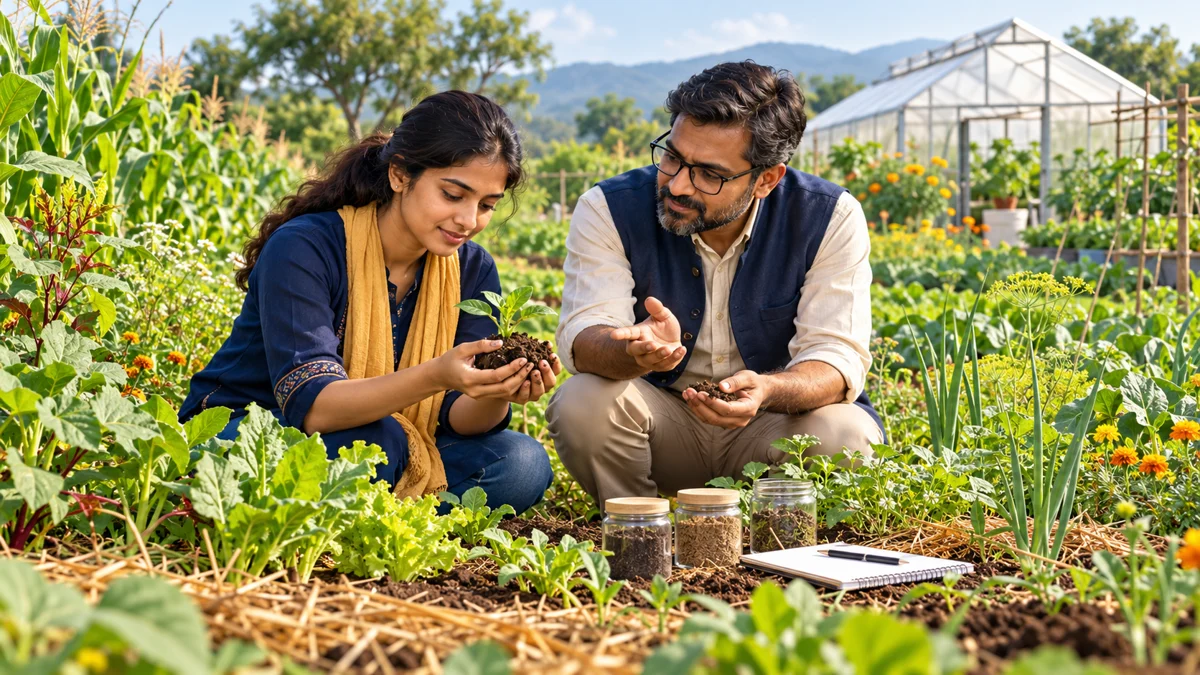
Natural Farming is receiving attention in postgraduate agricultural education. On 6 October 2026, ICAR's Agricultural Education Division held a consultation in New Delhi on proposed PG and PhD programmes in the field. For students considering a specialised degree, the development is worth following—but it should not be read as an invitation to apply.
Curriculum consultation, not confirmed admissions. The cited ICAR report does not provide a university-wise intake, application deadline, entrance route or fee schedule for these proposed programmes. Wait for the relevant institution's formal prospectus before making an admission decision.
What did ICAR discuss about Natural Farming studies?
According to the official ICAR consultation report, proposed M.Sc and PhD curricula were presented for stakeholder feedback. The discussion highlighted biological inputs, soil health, certification, value chains, marketing, digital technologies and entrepreneurship, alongside conceptual clarity about different chemical-free farming approaches.
The emphasis on multidisciplinary, practical and industry-connected learning is a direction for curriculum development. It is not evidence that every agriculture university has already introduced the same degree.
What should an agriculture student take from this?
Use the announcement to sharpen your questions about postgraduate study. A specialisation becomes useful when its teaching, research facilities and supervision fit the work you want to do. A new course title alone cannot tell you that.
| Your interest | What to look for in a prospectus |
|---|---|
| Field research | Clear experimental methods, supervised fieldwork and opportunities to analyse results rather than observe demonstrations alone. |
| Farm advisory work | Practice in explaining evidence, recording local conditions and communicating uncertainty to different audiences. |
| Enterprise | Assignments that require realistic costing, customer understanding, record keeping and a plan for testing assumptions. |
| Further academic study | Research-methods training and a department whose current work matches your proposed topic. |
Do not select a programme on an unsupported salary or placement promise. Ask for the relevant department's records and distinguish a possible career direction from an available job.
Build a small portfolio before choosing your specialisation
You can begin preparing without claiming expertise or waiting for a new degree to launch. Choose one manageable question and discuss it with a teacher before starting any field activity.
- Define the question. Write down what you want to understand, the setting and the observations you would need. Avoid starting with a conclusion you hope to prove.
- Keep a reading log. Record where information came from, the conditions studied and the limitations the author reports. Separate research findings from promotional claims.
- Practise careful documentation. For a supervised exercise, keep dates, methods and observations together. Do not generalise from a single visit or a photograph.
- Show your reasoning. A short report should explain what you observed, what remains uncertain and what a stronger follow-up investigation would require.
This is preparation advice, not a prerequisite announced by ICAR. If you work with a farmer or community group, agree on the purpose of the activity and obtain permission before collecting or sharing information.
Before applying: verify the actual university programme
- Exact degree and academic session: Is the document for the course and year you intend to enter?
- Eligibility: Which previous degrees and subjects are accepted? Are there minimum marks or other conditions?
- Admission route: Which examination, application portal or selection process applies to that particular intake?
- Resources and cost: What teaching facilities, field access, supervision and total fees are documented?
- Qualification status: What do the university and relevant authorities say about the specific programme? Do not substitute a general institutional claim for course-level confirmation.
Keep the current prospectus and relevant notifications together. If details differ across pages, ask the institution to identify the applicable document before paying.
Frequently asked questions
Does this update mean applications are open?
No application window is established by the cited consultation report. Check a formal university admission notice for that information.
Is a Natural Farming specialisation automatically the best choice after B.Sc Agriculture?
No. Compare your interests with the actual curriculum, faculty, facilities and cost. A broad degree or another specialisation may suit a different goal better.
Can this article confirm fees or a guaranteed career outcome?
No. Obtain current fees from the institution and assess career claims using evidence. A curriculum development report cannot establish either.
Related agriculture reading
Source and editorial note
ICAR: consultation on proposed PG and PhD programmes in Natural Farming, dated 6 October 2026; checked on 19 October. The programme update is sourced to that report. The evaluation questions and preparation plan are MeriShiksha's editorial guidance.
Choose a course with clear evidence
Read the institutional documents first. For help comparing agriculture courses with your interests, speak with a MeriShiksha counsellor.
Get course guidanceThis article explains an education development and does not announce admissions on behalf of ICAR or a university. Eligibility, fees, selection and qualification requirements must be confirmed with the responsible institution.
